
The Pendulum Effect: Why Humans Swing From One Extreme to Another
As a therapist, I hear about anxiety, depression, relationship struggles, burnout, grief and self-doubt every single week. On the surface, these problems can look very different, yet underneath many of them sits a surprisingly common pattern. People aren't just struggling with what is happening to them. They are struggling with how they respond to it.
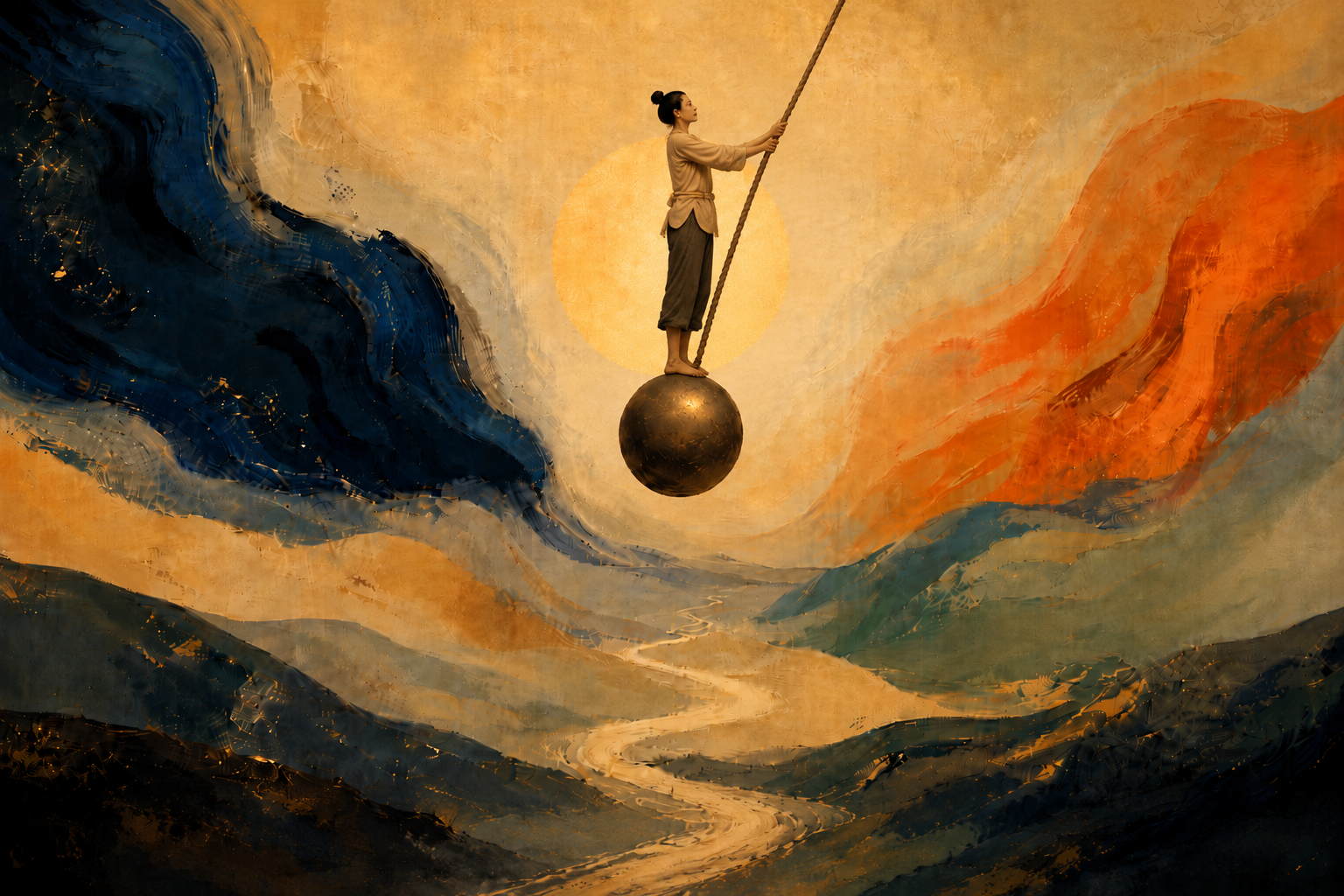
Again and again, I see people caught in a pendulum swing between opposites. Pushing themselves too hard and then collapsing. Restricting and then overindulging. Giving too much and then withdrawing completely. It is as though the middle ground exists in theory, but remains frustratingly difficult to live in.
Someone has been dieting for six weeks and then finds themselves eating half the contents of the kitchen at 10pm.
Someone has been working twelve-hour days for months and suddenly can't get off the sofa.
Someone gives everything to everyone else until they burn out and then withdraw completely.
Someone abstains from alcohol for weeks, feels in control and then drinks far more than they intended.
Again and again, I see people wrestling not with the problem itself, but with the pendulum swing between opposites.
The question isn't usually, 'Why did I eat the cake?'
It's often, 'Why can't I just have one slice?'
Why do human beings seem so drawn towards extremes? Why is moderation often harder than either complete abstinence or total indulgence?
The answer is far more interesting than simple willpower.
The Disease of Expectation
Many of us grow up believing life is a performance.
Perhaps we learned that achievement brought approval. Good grades. Good behaviour. Success. Competence.
Maybe we discovered that being useful, productive, clever, responsible or self-sacrificing gained us attention, safety or belonging.
The problem is that these strategies often work.
Until they don't.
As adults, many people become trapped in what I sometimes call the disease of expectation.
The feeling that we must constantly be achieving, improving, fixing, proving or becoming.
The finish line keeps moving.
Get the promotion.
Lose the weight.
Buy the house.
Run the business.
Raise the children.
Stay healthy.
Look younger.
Earn more.
Be grateful.
Be mindful.
Be productive.
Somewhere along the way, life starts to feel less like living and more like performance management.
The nervous system can tolerate this for a while.
Then eventually it rebels.
And what looks like laziness, self-sabotage or loss of motivation may actually be exhaustion.
The Brain Loves Certainty
Neuroscience gives us some clues.
The brain is constantly trying to reduce uncertainty.
Black and white thinking is easier than nuance.
All or nothing feels safer than 'it depends'.
Our brains evolved to make rapid decisions about survival. They are not naturally designed for endless ambiguity.
This is why rigid rules often feel comforting.
'I'll never eat sugar again.'
'I'm working every evening until this project is finished.'
'I'm never drinking again.'
The rule creates certainty.
The problem is that humans aren't machines…..Eventually biology pushes back.
The body gets hungry.
The mind gets tired.
The emotions demand attention.
And the system swings the other way.
Researchers studying self-control have found that excessive restriction often increases the likelihood of later overindulgence. The harder we clamp down on a desire, the more psychological energy becomes focused upon it.
Tell yourself not to think about chocolate.
Notice what happens.
Fear Often Sits Beneath Both Extremes
What fascinates me is that opposite behaviours are often driven by the same fear.
The workaholic and the procrastinator may both fear failure.
The perfectionist and the person who never starts may both fear criticism.
The binge eater and the chronic dieter may both fear rejection.
One person copes by moving towards action.
The other copes by moving away from it.
Different behaviours.
Same underlying anxiety.
When we only focus on behaviour, we miss the deeper story.
Script, Anti-Script and Script-Free Living
Transactional Analysis offers a useful lens here.
Many of us live according to unconscious life scripts - messages absorbed from childhood that shape how we believe we must be in order to survive and belong.
Work hard.
Don't be selfish.
Don't fail.
Don't need anyone.
Be strong.
Please others.
These scripts become our internal operating systems.
Sometimes people remain inside the script.
The person who always achieves.
The person who always rescues.
The person who always performs.
Then one day they can't do it anymore.
The pendulum swings.
Transactional Analysis calls this anti-script.
The rebellion.
The opposite position.
The high achiever suddenly stops trying.
The caretaker withdraws.
The responsible person becomes reckless.
The compliant child becomes defiant.
The anti-script often feels liberating initially because it offers relief from years of pressure.
But it is still reactive.
The script says 'always do this.'
The anti-script says 'never do that.'
Neither is freedom.
Script-free living sits somewhere else entirely…..It allows choice.
Today I work hard because I want to.
Tomorrow I rest because I need to.
Neither defines who I am.
That flexibility is often where genuine wellbeing lives.
Comparisonitis: The Modern Epidemic
Of course, moderation becomes even harder when we constantly compare ourselves to everyone else.
We are exposed to more human achievement in a single day than our ancestors saw in a lifetime.
Someone is fitter.
Someone is richer.
Someone is happier.
Someone has a cleaner kitchen.
Someone is running an ultramarathon while apparently maintaining perfect emotional regulation and making sourdough.
Or so social media would have us believe.
Research consistently links upward social comparison with reduced wellbeing, lower self-esteem and increased anxiety.
The problem isn't inspiration.
The problem is forgetting that we are comparing our ordinary Tuesday with someone else's highlight reel.
Comparison creates pressure.
Pressure creates expectation.
Expectation creates performance.
Performance creates exhaustion.
And exhaustion eventually creates rebellion.
The pendulum swings once again.
The Middle Ground Is Not Mediocre
One reason people struggle with balance is that it feels strangely unsatisfying.
Extremes have drama.
They have certainty.
They have identity.
'I've lost three stone.'
'I'm working eighty hours a week.'
'I'm training every day.'
'I'm leaving everything.'
The middle rarely makes headlines.
Yet psychologically, the middle ground is often where resilience lives.
Not perfection.
Not failure.
Just adaptability.
The ability to respond rather than react.
To work hard without becoming work.
To enjoy food without being controlled by it.
To rest without feeling guilty.
To care without rescuing.
To achieve without believing achievement determines worth.
What I See in the Therapy Room
Perhaps this is why this theme appears so frequently in my work.
People rarely come because they have failed.
Most often they come because they are exhausted from trying so hard not to fail.
Underneath the overworking is fear.
Underneath the procrastination is fear.
Underneath the perfectionism is fear.
Underneath the people-pleasing is fear.
And beneath much of it lies a painful question:
'Am I enough if I stop performing?'
That question deserves attention. Because when people begin to answer it differently, something shifts.
The pendulum slows.
The nervous system softens.
Choice returns.
Life becomes less about proving and more about living.
Perhaps balance isn't about finding the perfect midpoint after all.
Perhaps it's about developing enough self-awareness that we no longer need the extremes to tell us who we are.
And that may be one of the most freeing discoveries any of us can make.
If any of this feels familiar, perhaps the question isn't whether you need more discipline, more motivation or more willpower.
Perhaps the question is whether the pendulum has been trying to tell you something all along.
